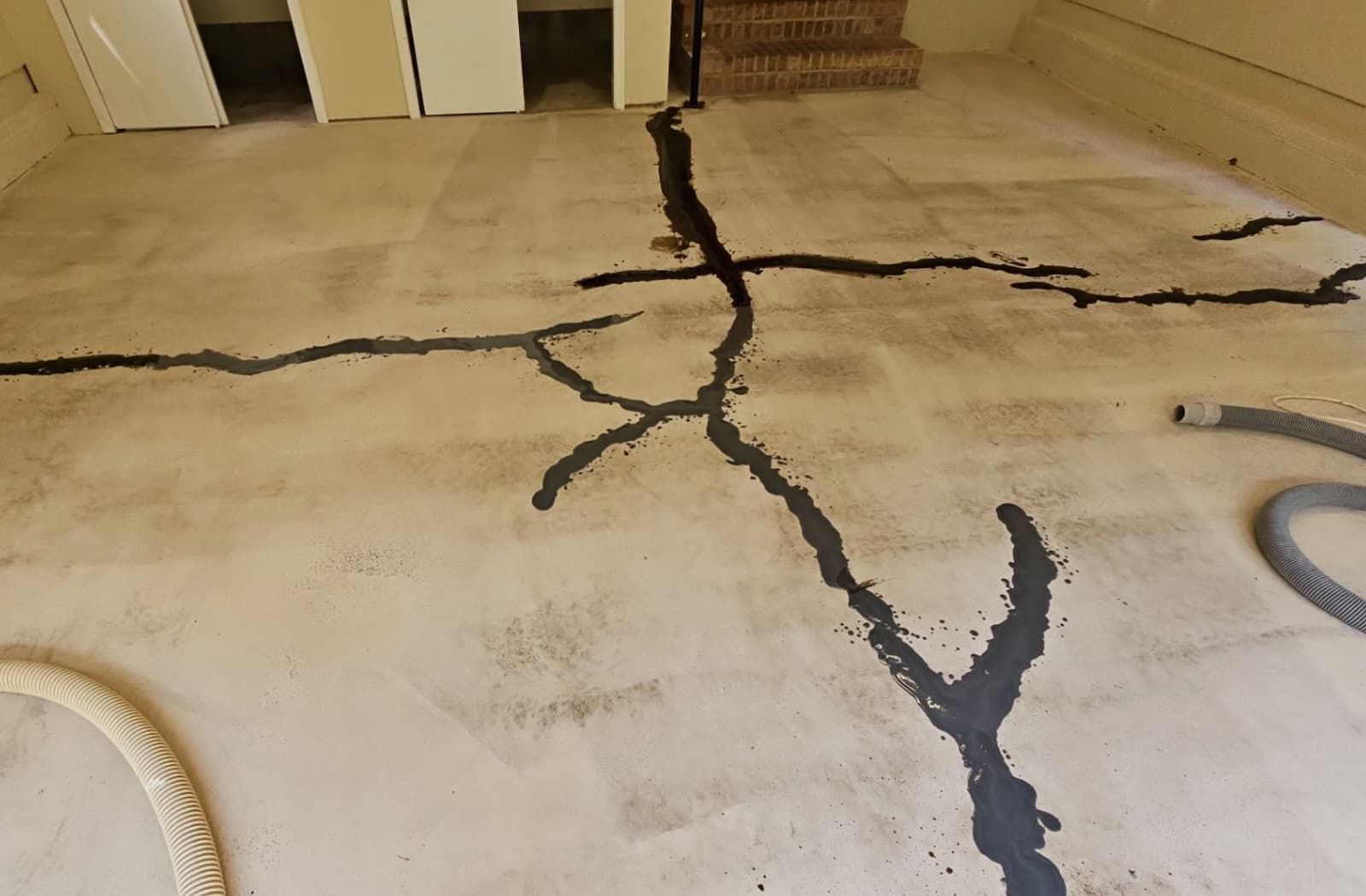
Concrete Crack Repair Before Coating
Coating over a cracked slab doesn't fix the crack — it just hides it for a while. Within a season or two, most uncoated cracks telegraph right back through, showing up as a line in the new finish exactly where the damage was underneath. We repair concrete cracks for garages across Cambridge, Kitchener, and Waterloo before any coating goes down, so what you're paying for actually lasts instead of failing at the same weak point the old floor had.
Why Cracks Need to Be Dealt With First, Not Covered
Concrete cracks for a reason — usually settling, freeze-thaw movement, or stress from a heavy vehicle parked in the same spot for years — and that underlying movement doesn't stop just because a new coating went on top. A crack that's still active will keep shifting, and a rigid coating has nowhere to go but crack along with it. Repairing properly means figuring out whether a crack is static or still moving, then choosing a repair that matches: a small, stable crack can often be routed and filled, but one that's still active needs a flexible repair material that can move with the slab instead of fighting it.
Repair Methods We Use
For static, hairline cracks, we rout out the crack to create a clean channel, then fill it with a rigid epoxy filler that bonds tightly to both sides and restores structural continuity to the slab. For cracks that are still moving — common in garages with a lot of temperature swing between the heated house and the unheated slab — we use a flexible polyurethane injection instead, which stays pliable and moves with the concrete rather than cracking again at the same spot. Wider or deeper cracks sometimes need a combination approach, starting with structural epoxy injection before the surface is leveled off for coating.
Additional Measures We Check For
While we're repairing cracks, we're also checking the surrounding slab for related issues — spalling at the crack edges, moisture coming up through the damaged area, or a broader pattern of cracking that suggests the slab needs surface grinding across a wider section, not just spot repair. If your floor needs both crack repair and surface preparation, we sequence them properly so the repair material has time to cure before grinding starts.
What Affects the Investment
Crack repair pricing depends on how many cracks there are, how wide and deep they run, and whether they're static or still active (flexible polyurethane repair typically costs more than a straightforward epoxy fill). We'll assess the cracking on your specific slab and give you a clear quote before any repair work begins — no guessing after the fact.
Dealing with cracks in a Cambridge or Kitchener-Waterloo garage floor before coating? Request your free quote and we'll take a look.
Get a free quote
Contact Us