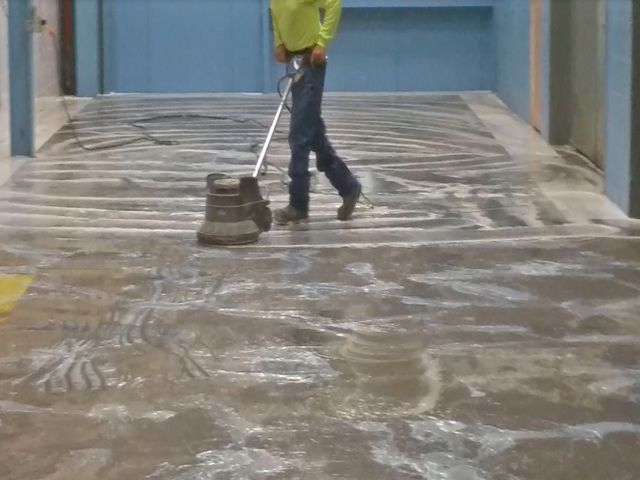
Concrete Surface Preparation & Grinding
The coating is only as good as what it's bonded to. A huge share of the coating failures we get called out to fix — peeling, bubbling, whole sections lifting within a year or two — trace back to one thing: the slab wasn't properly prepared before anything was applied to it. We do concrete surface preparation and diamond grinding for garages across Cambridge, Kitchener, and Waterloo, whether that's ahead of a new coating we're installing or as a standalone fix for a slab that's failing because of how it was originally prepped.
Why Proper Prep Actually Matters
Concrete looks solid, but the surface almost always has a thin layer of contamination sitting on top of it — sealers from a previous treatment, oil that's soaked in over the years, a dusty laitance layer left over from how the slab originally cured. Coating over any of that is why so many DIY epoxy kits fail fast. Grinding removes that layer and opens up the concrete's pores so whatever goes on next actually bonds to the slab itself, not to a film sitting on top of it. Skip this step and even a premium coating is working against a surface it was never designed to stick to.
Prep Methods We Use
Diamond grinding is our go-to for most garage floors — mechanical diamond-tipped discs grind down the top layer of the slab, leveling minor high spots and creating a consistent surface profile that's ideal for polyaspartic or epoxy systems. For floors with deeper surface damage or heavier existing coatings that need to come off first, we'll use shot blasting to strip the surface back further. Acid etching is the lightest-touch option and can work for some jobs, but it doesn't open the surface profile as reliably as mechanical grinding does, which is why we default to grinding whenever the slab allows it. We'll assess your specific floor and tell you which method actually fits before we start, rather than defaulting to whichever is fastest for us.
Additional Measures We Check For
While we're grinding, we're also looking at the slab for anything that needs to be addressed before coating goes down — hairline cracks that will telegraph through a new finish if left alone, low spots that pool water, or moisture coming up through the concrete that can cause a coating to fail from underneath even when the surface prep itself was done right. Catching these now is a lot less costly than dealing with a coating failure six months after installation.
What Affects the Investment
Surface prep pricing depends mainly on the condition of your existing slab — a newer floor with no prior coating needs far less work than one that's stripping off years of old epoxy or dealing with contamination and cracking. Square footage and the prep method required both factor in too. We'll walk your garage, assess what the slab actually needs, and give you a straightforward quote before any grinding starts.
Getting ready to coat a garage floor in Cambridge or Kitchener-Waterloo, or dealing with a coating that's already failing? Request your free quote and we'll take a look.
Get a free quote
Contact Us