Manufacturing Epoxy Flooring | Grand River Epoxy
A production floor asks more of its surface than almost any other building type. Heavy machinery, constant vibration, hot and corrosive fluids, impact from dropped tooling and, in electronics and precision work, the very real problem of static electricity all land on the same slab. Manufacturing epoxy flooring from Grand River Epoxy is specified for those conditions: a seamless, high-build system with chemical, thermal and impact resistance, and ESD (anti-static) systems where your process needs them.
We work with plants and fabrication shops from our home base in Cambridge through to the industrial corridors of Guelph, and plan every install in sections so production is never asked to stop all at once. Looking for concrete floor coating waterloo region for an industrial space? This is the page for you.
What a Manufacturing Floor Is Up Against
Unprotected concrete in a plant is a liability. Cutting oils, coolants, solvents and acids etch into the surface, hot-wash and steam cleaning breaks down sealers, and heavy equipment cracks joints that then trap fluid and debris. Over time you end up with a floor that is hard to clean, a slip risk around machines, and a surface that sheds dust into processes that cannot tolerate it.
A properly specified industrial manufacturing floor coating gives the slab a continuous, non-porous face. Fluids stay on top where they can be cleaned, the surface resists the thermal swings that come off equipment and wash-down cycles, and the dust problem largely disappears. It is the same reasoning behind the work described on our Industrial Epoxy Floors page, just tuned to the demands of a production line.
Systems Matched to Your Process, Including ESD Flooring
Because no two plants run the same process, we choose the system after we understand yours. A fabrication bay with overhead cranes needs a heavy, impact-resistant build. A food-adjacent or chemical area needs a chemical-resistant manufacturing floor with the right resin for what actually gets spilled. A machining cell may want a high-gloss, light-reflective finish that makes metal chips and fluid leaks easy to spot.
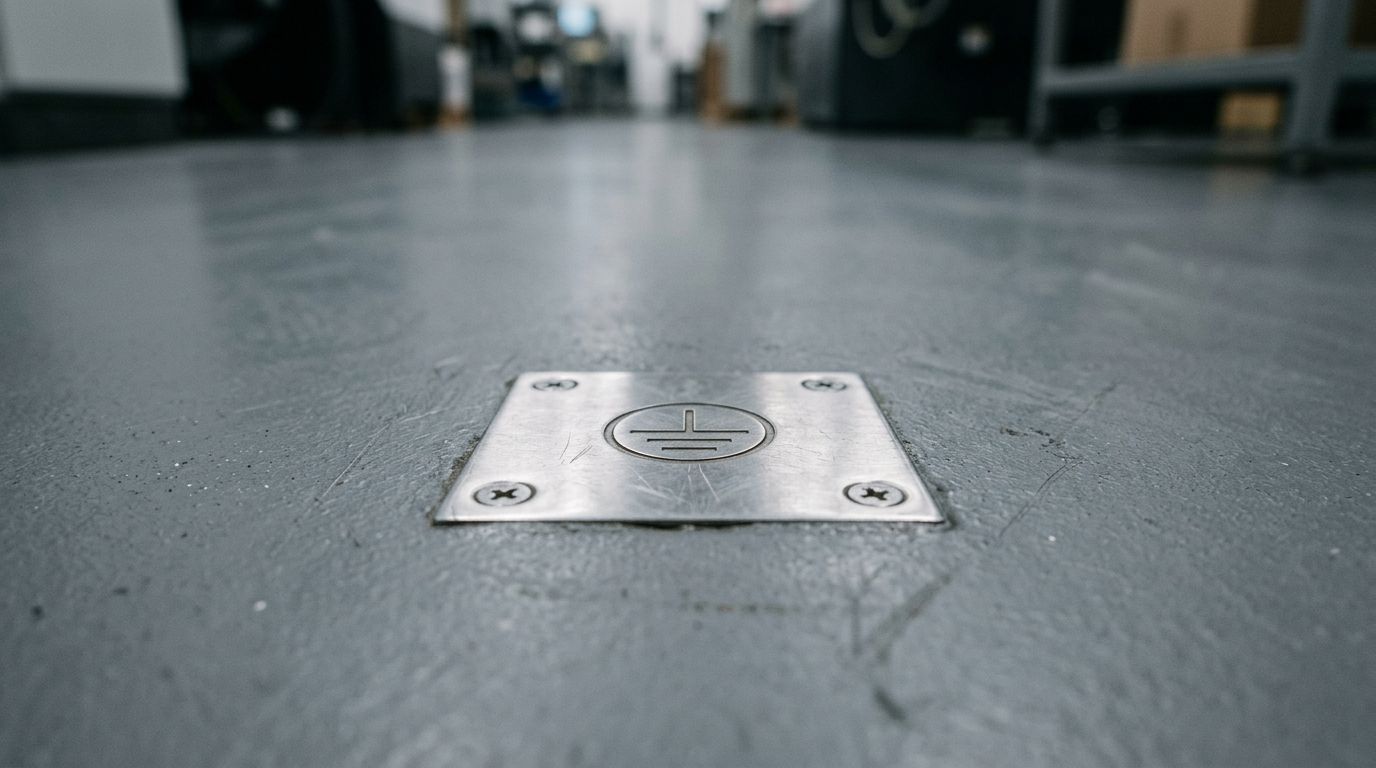
Where static is a hazard, we install ESD flooring, also called anti-static or static-dissipative flooring. These systems use conductive or dissipative layers to bleed static charge safely to ground rather than letting it build up and discharge, which protects sensitive electronics and reduces spark risk in the right environments. If your operation handles circuit boards, precision assemblies or other static-sensitive product, ask us about anti-static epoxy flooring early, because it affects how the whole floor is designed. We will walk through what your process needs and quote the system that fits, rather than guess.
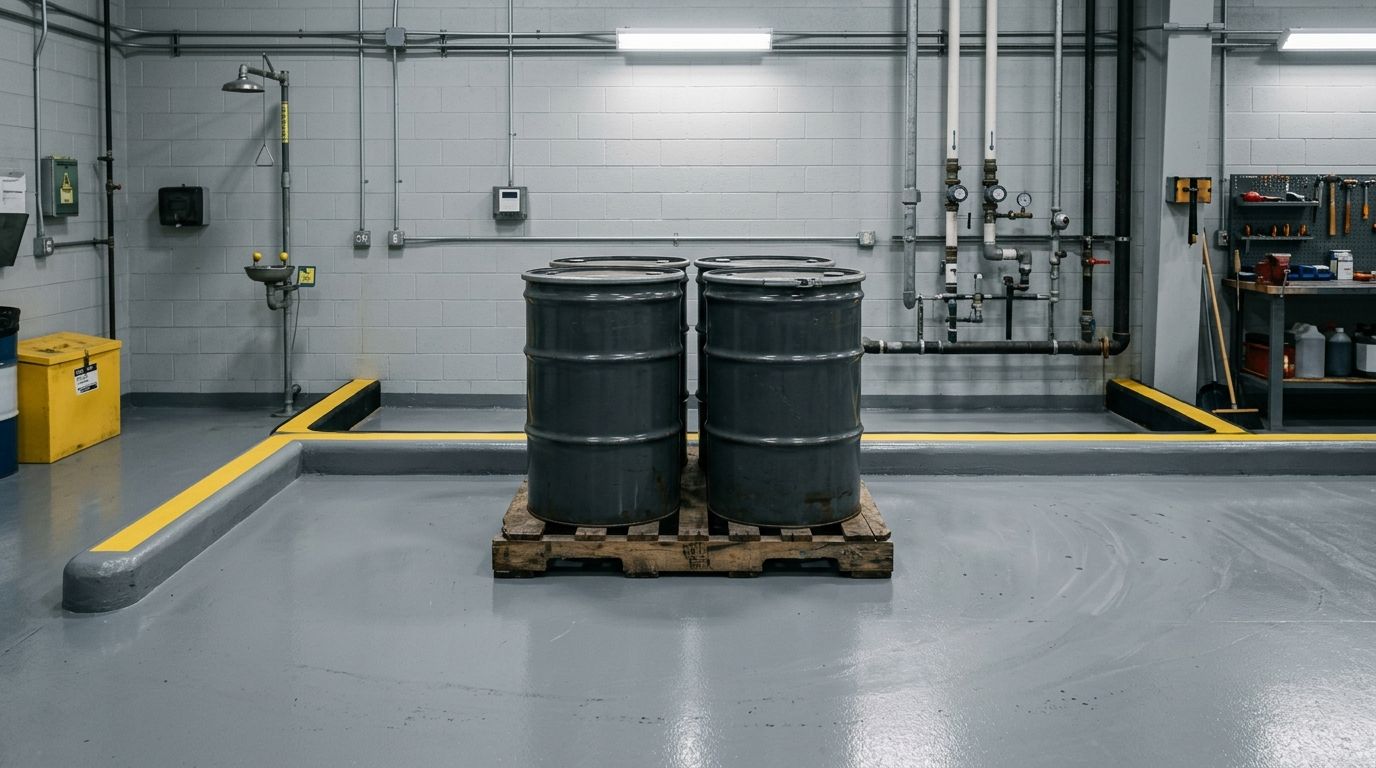
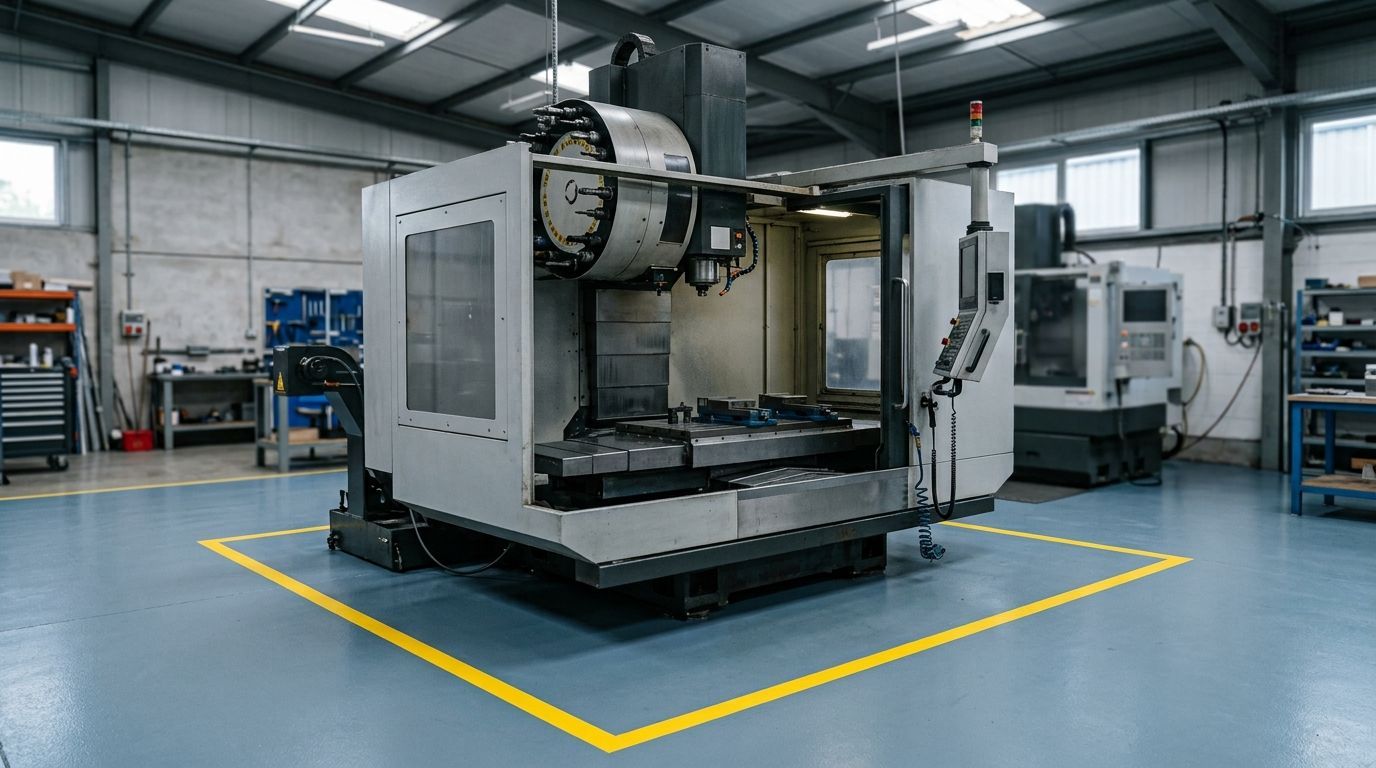
Zones can also be colour-coded straight into the coating: production, staging, walkways, forklift lanes and no-go areas, so the workflow is part of the floor itself and does not rely on tape or paint that wears away.
Added Protection for the Spots That Fail First
Plants tend to wear out the same places repeatedly: thresholds, wash bays, machine bases and the lanes where lift trucks turn. We reinforce those areas with higher-build sections, add traction with our Slip-Resistant Floor Coatings around wet or oily zones, and repair cracked joints and spalled edges through concrete crack repair before coating so a damaged slab never becomes a damaged coating.
Older industrial slabs are often uneven, oil-saturated or covered in previous coatings. All of that is removed and levelled through our concrete surface preparation and grinding service before any epoxy goes down, because the bond is only as good as the surface it is bonded to.
How a Plant Installation Is Staged
Plants cannot lose a whole floor at once, so the install is built around your production calendar:
- Process review. We learn what is spilled, what is heated, what rolls across the floor and whether static control applies.
- System selection. Resin, build thickness, finish and any ESD layers are chosen zone by zone, and you see the plan before work begins.
- Sectioned prep and coating. We work through shutdown windows, shift changes or weekends, one area at a time, and keep equipment access clear wherever we can.
- Cure, test and return to service. Each section is checked before machines roll back on, and ESD areas are confirmed against what the system is meant to deliver.
Good to Know Before You Call
To quote a plant floor properly, it helps to know the square footage, the main fluids and temperatures involved, what rolls across the floor, and whether you handle static-sensitive product. Existing coatings and the age of the slab matter as well, since they change the prep. Bring whatever you have, from drawings to phone photos, and we will confirm the details on site. If more than one department is involved in the decision, we are glad to talk with operations, maintenance and compliance together.
Fair Pricing Without Shutting the Plant Down
Industrial quotes are built from square footage, the system your process calls for and the prep your slab needs. We tell you plainly what each of those costs you, and we avoid padding the price for ESD or chemical-resistant upgrades that your floor does not actually require. A coating that survives years of fluid exposure and impact also costs less over its lifetime than repatching bare concrete every couple of seasons.
We schedule around shutdown windows, shift changes and weekends, and section the floor so each area comes back online as it cures. Get a free quote by sending us your square footage, current floor condition, whether ESD applies, and the downtime window you can work with.