Warehouse Epoxy Flooring | Grand River Epoxy
A warehouse floor is the one surface in the building that never gets a day off. Forklifts, pallet jacks, dropped loads, washdowns and moisture working up through the slab all hit it at once, and bare concrete answers by dusting, cracking and soaking up whatever lands on it. Warehouse epoxy flooring from Grand River Epoxy seals that slab under a seamless, easy-to-clean surface built around how your facility actually runs.
We install industrial warehouse flooring from our base in Cambridge and across the region, from distribution spaces in Kitchener to production-adjacent storage in Guelph. If you searched for concrete floor coating waterloo region, the short version is yes: we cover it, with the same crew and the same materials on every job.
Why Bare Concrete Struggles in a Working Warehouse
Raw concrete looks tough, but it is porous, and heavy-duty warehouse flooring has to do more than hide that. Oil from a leaking lift, a pallet of cleaning product that tips over, or condensation near a dock door all find their way into the surface, and the slab slowly breaks down into fine dust that settles on inventory and gets tracked through the building. Joints chip at the edges where hard-wheeled equipment crosses them, and a stained, patchy floor makes even a well-run facility look neglected.
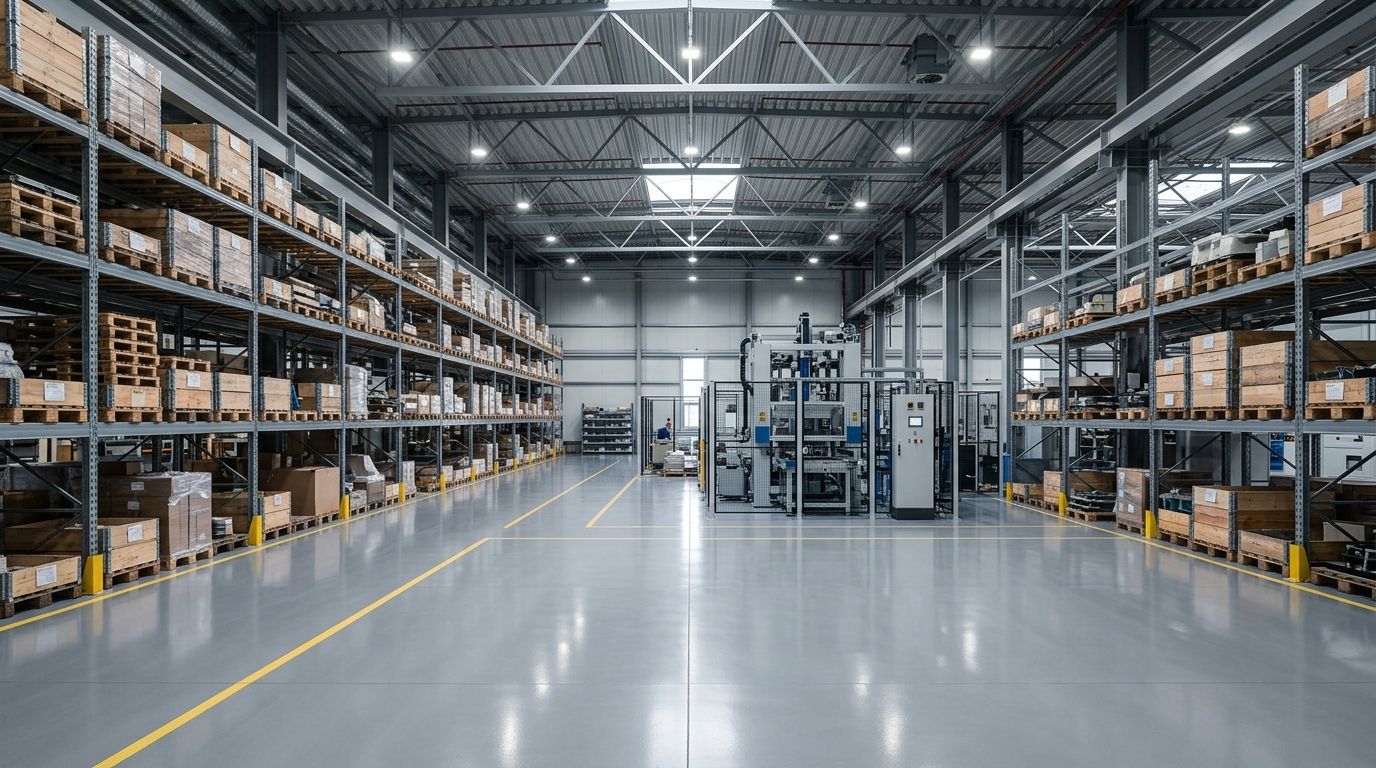
A warehouse epoxy floor coating closes the pores and bonds to the concrete as one continuous layer. Dust drops off sharply, spills sit on top where they can be wiped up, and a lighter-coloured floor reflects more of your overhead lighting back into the space, which makes aisles easier to read without touching a single fixture.
Built for Forklifts, Pallet Jacks, and Everything Else
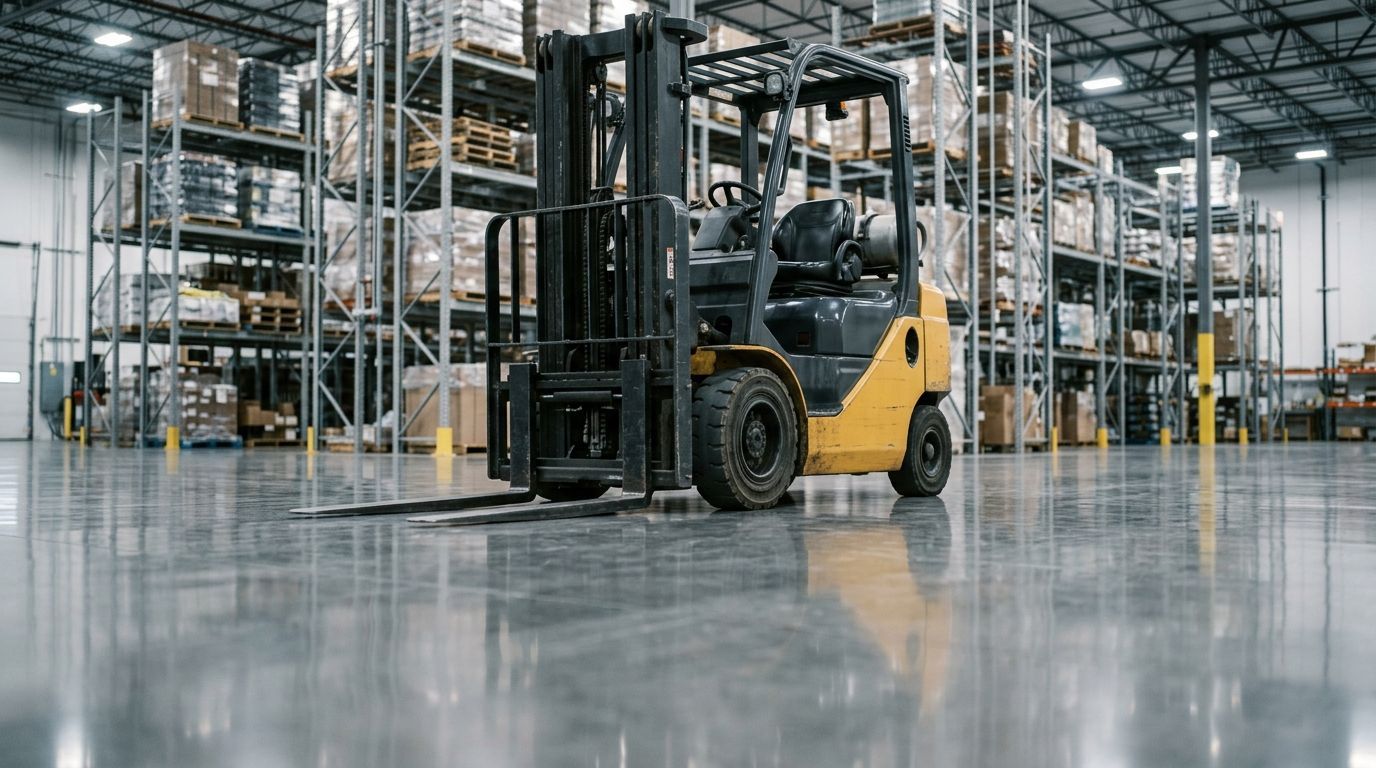
Not every warehouse floor needs the same system. A cold-storage aisle, a loading dock and a light-pick mezzanine all carry different loads, so we match the thickness and build to the traffic. For turning points, dock approaches and heavy rack bays we spec a high-build forklift-resistant floor coating so the surface holds up to hard wheels and repeated point loading instead of chipping out at the first corner. Our Industrial Epoxy Floors page covers the wider range of systems if you want to see what sits behind the options.
Because the coating is an epoxy rather than a paint, the layout of your building can be built into it. We can lay down directional marking, aisle lines, pedestrian walkways, staging areas and bay numbers in the colour you need, and those markings wear with the floor instead of fading off it within a season. Grey, white, safety yellow and custom colours are all available, and a clean white or light-grey base is the usual starting point for brighter, safer-feeling aisles.
Added Protection Where the Floor Takes the Most Abuse
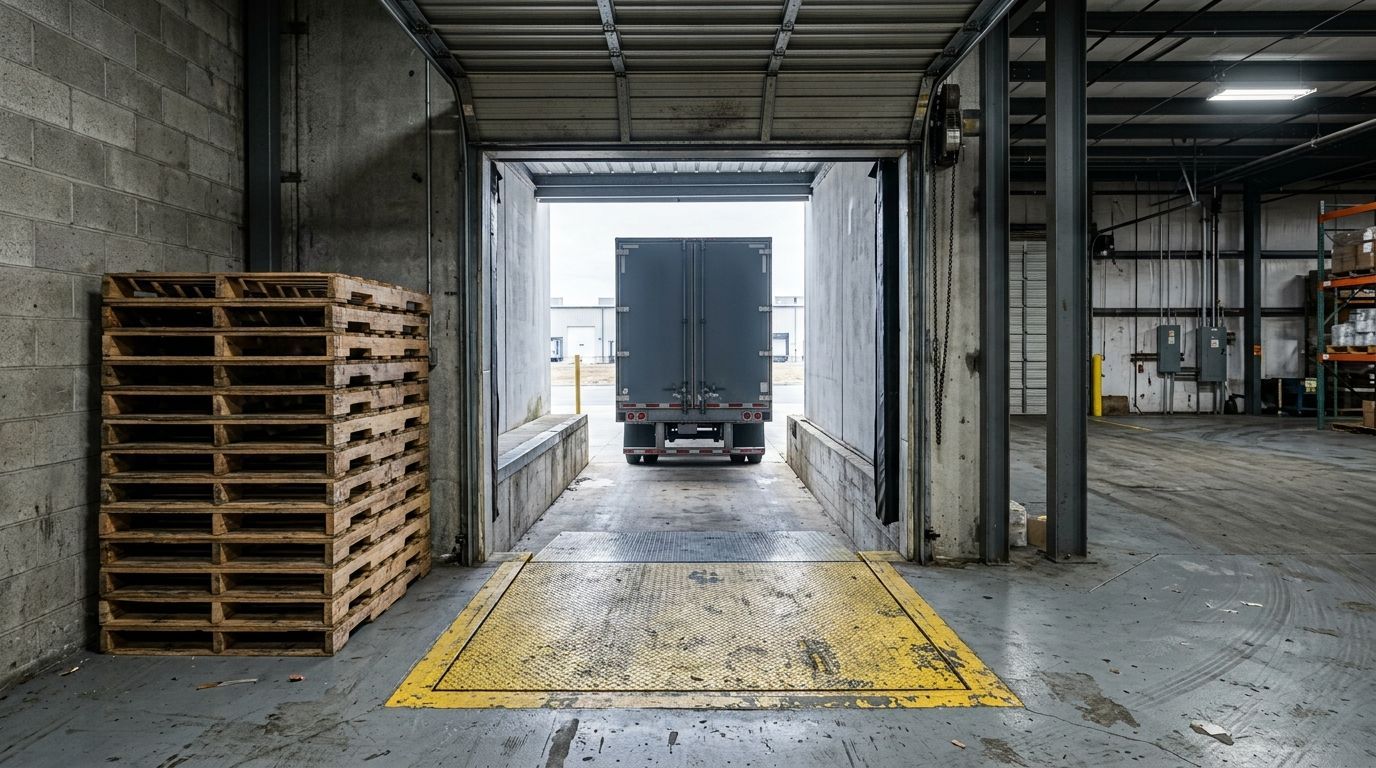
Dock doors, wash-down areas and battery-charging bays are where warehouse floors fail first, usually because they stay wet or take chemical splash. In those zones we add texture to the coating through our Slip-Resistant Floor Coatings so staff and equipment keep their footing without making the rest of the floor harder to sweep.
Coating only lasts as long as the concrete underneath it, so the prep is where the real work happens. Surfaces are ground and cleaned through our concrete surface preparation and grinding service, and any cracked joints or spalled edges are repaired through concrete crack repair before coating so those defects don't telegraph through the finished floor. If we see moisture coming up through the slab, we flag it during the site visit rather than coating over a problem.
How a Warehouse Installation Works
Large floors go smoothly when the sequence is planned before the first grinder starts. Here is how we usually run it:
- Walk-through and measure. We look at the traffic, the slab condition, the dock layout and any areas that stay wet, then agree on zones and a schedule that suits your operation.
- Prep the slab. Grinding, cleaning and joint and crack repair, section by section, so the coating has a sound surface to bond to.
- Coat and mark. Primer, the epoxy build suited to each zone, and aisle lines, walkways and bay markings laid in as part of the floor.
- Cure and hand back. Each section is cleared for foot traffic and then equipment on a set timeline, so your team knows exactly when an aisle is available again.
Good to Know Before You Call
A few details help us quote a warehouse accurately: the approximate square footage, whether the slab is indoors or partly exposed, what kind of equipment crosses it, and whether anything in the building (cold storage, chemical handling, food products) changes the coating we should choose. Photos of problem areas, such as cracked joints or oil staining near docks, are useful too. None of this needs to be perfect; we confirm everything on site before the price is final.
Straight Pricing and Minimal Disruption
Warehouse jobs are priced by square footage and system, and we give you a straight quote after seeing the space, with no inflated markup for the size of the building. Because a seamless, chemical-resistant coating avoids the cycle of patching, repainting and re-grinding that bare or painted concrete demands, it tends to cost less over the life of the floor than the cheaper options do.
We can work in sections, by aisle, bay or zone, so product keeps moving while each area cures. Tell us your operating hours and we will build the schedule around them. Get a free quote with your square footage, current floor condition and the kind of traffic the space handles, and we will come back with a clear plan.