Epoxy vs Vinyl Flooring for Basements
Which Holds Up Better?
Finishing a basement usually comes down to one big flooring decision, and around Cambridge and the Waterloo Region the two options we hear about most are epoxy and luxury vinyl plank. Both are marketed as waterproof. Both can look great. But they handle moisture, comfort and wear very differently, and the epoxy basement floor vs vinyl choice that suits one house can be wrong for the next. Here's how they really compare in an Ontario basement.
The Quick Comparison
| Epoxy coating | Luxury vinyl plank (LVP) | |
|---|---|---|
| How it's installed | Bonded directly to the concrete slab as a seamless coating | Planks click together and float over the slab, usually on an underlayment |
| Water on the surface | Seamless, so spills and leaks stay on top and wipe up | Planks resist water, but it can get through the seams and sit underneath |
| Moisture from the slab | Needs a moisture test first; damp slabs need a moisture-tolerant primer | Can trap moisture under the planks if there's no proper vapour barrier |
| Feel underfoot | Hard and cooler, warmer with rugs or in-floor heating | Softer and warmer, especially with a good underlayment |
| Floor height | Adds almost no height | Adds height, which can affect doors and the bottom stair |
| Looks | Metallic, flake, marble or solid colour, no seams | Realistic wood and stone looks, with visible plank lines |
| Damage and repairs | Resists scratches and dents well; repairs are a pro job | Individual planks can be swapped; heavy furniture can dent it |
| Install | Professional install | DIY-friendly |
What Vinyl Plank Gets Right
So, is vinyl plank flooring good for basements? In a lot of them, yes. It's warm and comfortable underfoot, it comes in convincing wood and stone looks, and because the planks float rather than bond to the slab, a handy homeowner can install it over a weekend. If a plank gets damaged, it can be swapped out.
Its weak spot is what happens below the surface. The planks themselves resist water, but the seams don't seal completely, and the floor sits on top of the concrete rather than bonding to it. In a basement that ever sees a leak, a backed-up drain or moisture coming up through the slab, water can end up trapped under the planks, out of sight, where it can lead to odours and mould.
What Epoxy Gets Right
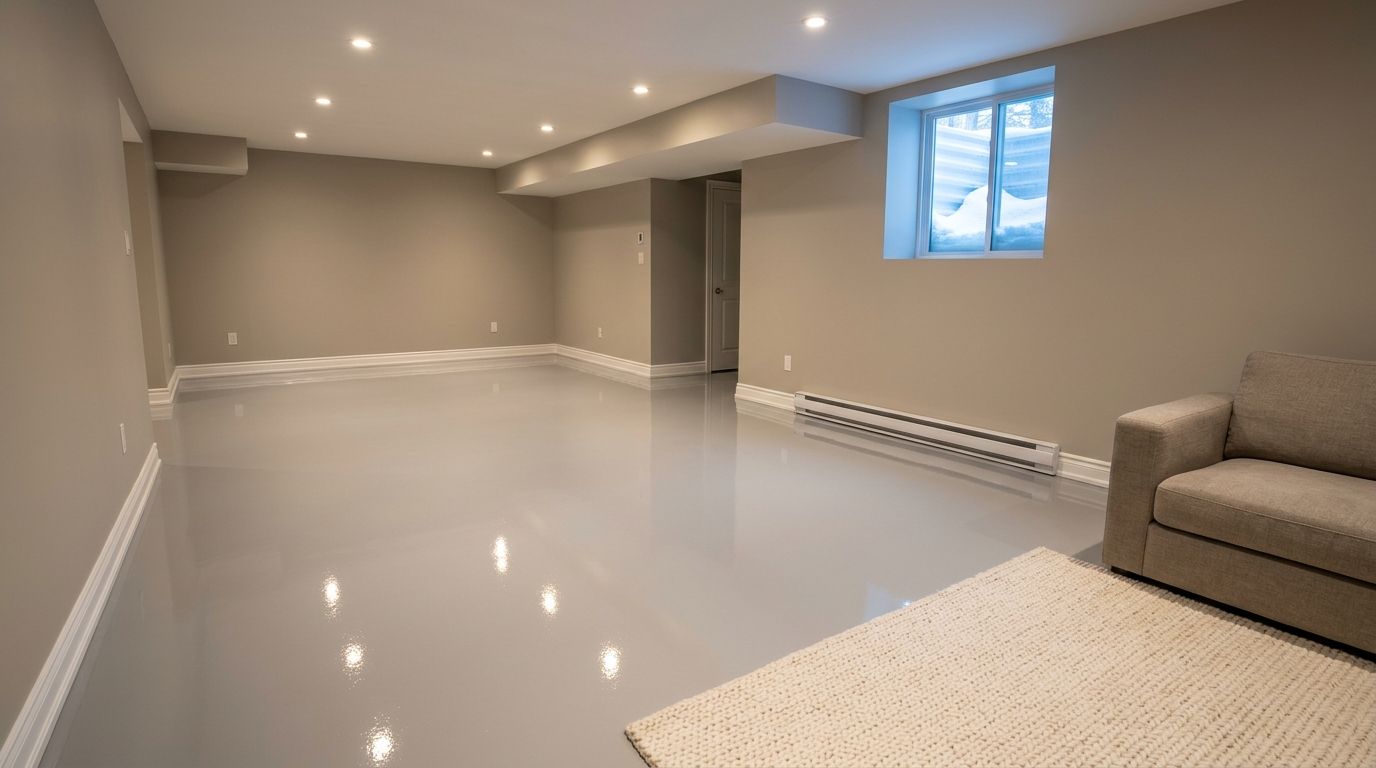
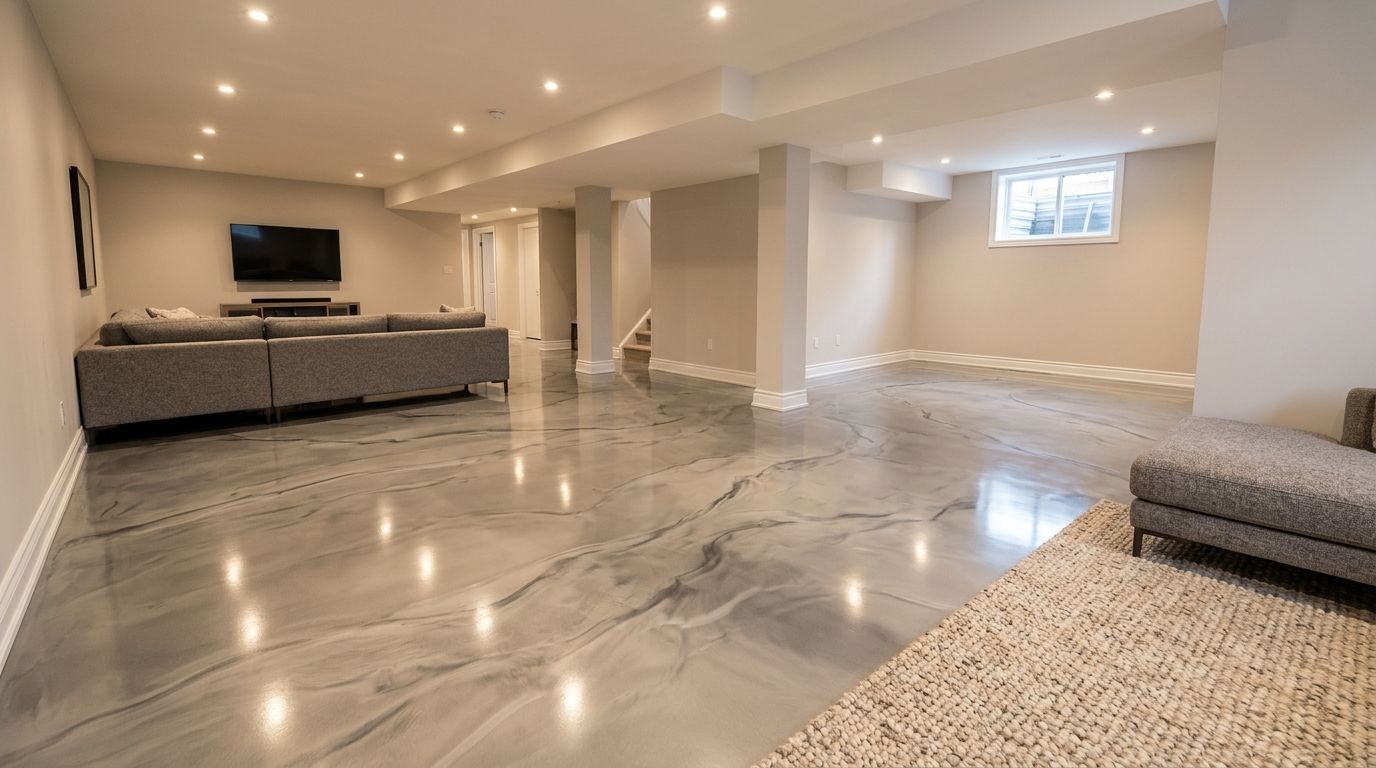
An epoxy coating bonds directly to the concrete, so there's no gap underneath for water to collect in and no seams for it to slip through. If the basement floods, the floor gets cleaned and dried, not torn up. It's also tough: it shrugs off furniture, gym equipment and kids' toys, and it's easy to keep clean. Our basement epoxy floors page shows how this looks in finished spaces.
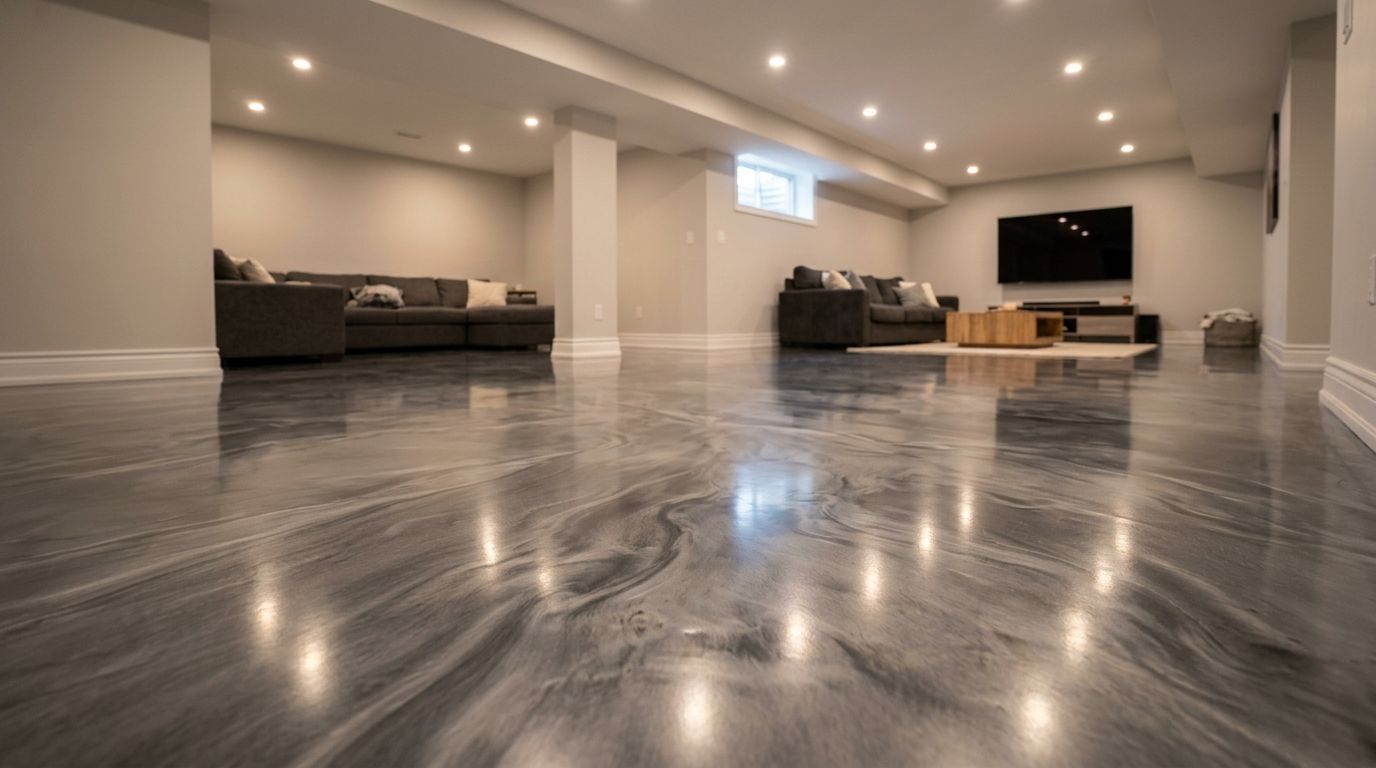
It's also far more design-flexible than most people expect. Metallic finishes turn a basement into a showpiece; flake finishes suit gyms, laundry rooms and rec rooms. If you're weighing those two, our flake vs metallic epoxy flooring comparison covers them side by side, and our guide to the types of epoxy flooring covers the full range.
Moisture: The Deciding Factor in Most Basements
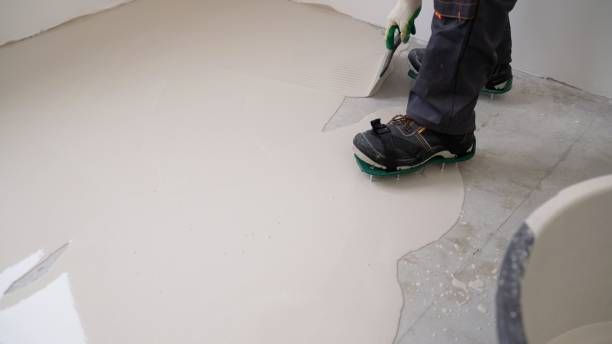
Every basement slab carries some moisture, and that's what decides how well either floor will perform. Before any coating goes down, we run a basement floor moisture test. If the slab is drier, a standard epoxy system bonds well. If it's damp, the system starts with a moisture-tolerant primer. Any cracks get proper crack repair first, and the slab gets mechanical surface preparation so the coating bonds properly.
Vinyl needs a moisture plan too, usually a vapour barrier under the underlayment. It isn't a reason to rule vinyl out, but it's the step that most often gets skipped on DIY installs, and it's the one that matters most later.
Durability and Upkeep
Day to day, both floors are easy to clean. Over the long run, epoxy holds up better to heavy furniture, equipment and wet use, and a UV-stable polyaspartic topcoat adds extra scratch resistance. Vinyl is more forgiving if something is dropped, but it can dent under heavy loads and its wear layer eventually wears through in high-traffic paths. It's the same kind of seamless system that holds up on our garage epoxy floors, just finished for a living space.
Epoxy vs Vinyl Flooring Cost
Every floor is quoted on its own, so we don't publish prices. The epoxy vs vinyl flooring cost comparison usually comes down to labour and prep: vinyl can be installed DIY, which lowers the upfront cost, while epoxy is a professional install that includes slab prep and any repairs. On the other hand, a coated floor survives a basement leak that could mean replacing a vinyl floor, so the longer-term picture often looks different from the upfront one.
So, Epoxy or Vinyl Flooring for Your Basement?
- Choose epoxy if the basement has ever had water, if it's a gym, laundry or workshop space, if you want a seamless decorative look, or if you're planning in-floor heating.
- • Choose vinyl if the slab is reliably dry, comfort and a wood look are the priority, and you're comfortable doing the install and moisture barrier properly.
Plenty of homeowners split the difference: epoxy in the laundry room, gym and utility areas, and a softer floor in the TV room. Whatever you choose, it starts with knowing what your slab is doing. That's the first thing we check on basements across the Waterloo Region, and it's the same approach we take on residential epoxy floors and commercial epoxy floors alike.
Frequently Asked Questions
Is epoxy or vinyl better for a basement that has flooded before?
Epoxy, in most cases. It bonds to the slab with no seams or gap underneath, so water stays on the surface and can be cleaned up. Water can get under floating vinyl planks and stay trapped there.
Can you put epoxy over in-floor heating in a basement?
Yes. Epoxy can be installed over radiant in-floor heating, and we do it. It's one of the best ways to get a warm, durable basement floor. Planning the job for the colder months? See installing epoxy in winter.
Do you need to test a basement floor for moisture before epoxy?
Yes. We test the slab before recommending a system. A damp slab gets a moisture-tolerant primer so the coating bonds properly instead of lifting later.
Can epoxy go over an existing vinyl or tile floor?
Epoxy needs to bond to the concrete, so floating vinyl has to come up first. Tile is sometimes coated over, but in a basement we usually recommend removing it and coating the slab directly.
Planning a Basement Floor This Winter?
We'll test your slab, talk through how you'll use the space, and give you an honest take on whether epoxy or another floor fits better. Call us at 226-243-3104 or request a free quote.