Grand River Epoxy | Epoxy Flooring Blog
Can You Do Epoxy Flooring in Winter? What Cold Weather Changes Indoors
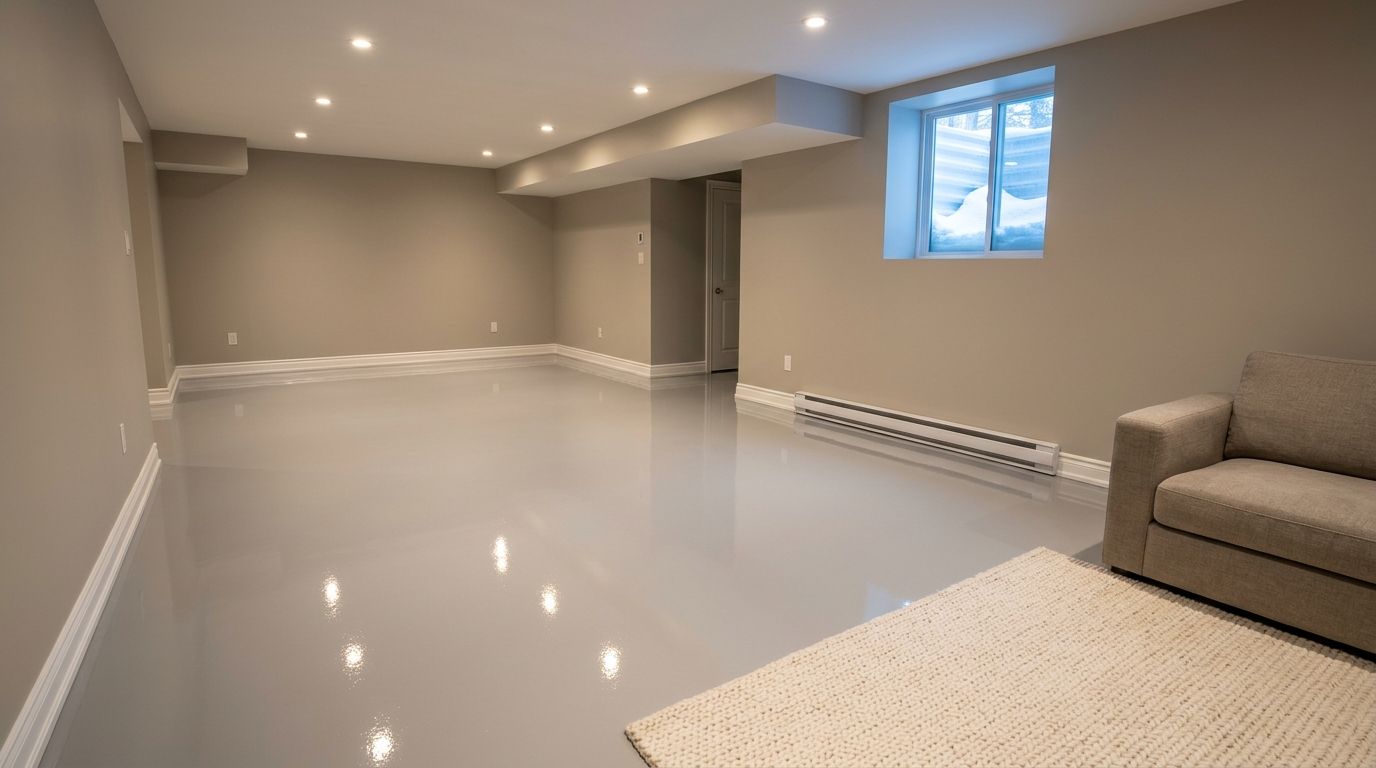
Winter is when a lot of people finally get around to the basement. The garden's done, everyone's indoors, and that bare concrete floor is staring back at you. So it's a fair question: can you install epoxy in winter, or does everything have to wait for spring?
The short answer is yes, indoors, as long as the space is properly heated and the concrete itself is warm enough. Epoxy doesn't care what month it is. It cares about temperature and moisture in the room where it's curing. Here's what that means for a basement or commercial space in an Ontario winter.
Why Temperature Matters So Much
Epoxy is a two-part system: a resin and a hardener that react chemically and cure into a hard, bonded layer. That reaction is driven by heat. In a warm room it happens at a steady, predictable rate. In a cold room it slows down, and that's where problems start.
If you've read our guide to the types of epoxy flooring, every finish there, from solid colour to metallic, relies on the same reaction. Get the conditions right and they all cure properly. Get them wrong and none of them do.
Epoxy Cold Temperature Limits
Every epoxy product lists its own epoxy cold temperature limits, and they're worth taking seriously. Most systems need the air and the concrete to stay above a minimum temperature, typically around 10°C or a little higher, from the moment the material is mixed until it has cured. The exact number depends on the product, so the manufacturer's data sheet is always the final word.
Two details catch people out:
- The slab matters more than the air. Concrete holds cold. A basement can feel comfortable while the floor is still well below the air temperature, especially along exterior walls. Installers check the surface temperature, not just the thermostat.
- Dew point matters too. If the slab is close to the dew point, moisture can condense on it as a thin film you can't see. Epoxy applied over that won't bond properly.
What Happens When Epoxy Cures in the Cold
Curing epoxy in cold temperatures causes a predictable set of problems:
- Slow or incomplete cure. The floor stays soft or tacky far longer than it should, and may never reach full hardness.
- Amine blush. A cloudy, waxy or greasy film forms on the surface. It dulls the finish and can stop the next coat from bonding.
- Poor flow. Cold epoxy thickens. It doesn't level out as smoothly, which shows as roller marks or an uneven surface.
- Weaker bond. A coating that cures badly is more likely to peel or delaminate later.
Decorative finishes are the most sensitive. A metallic floor depends on the installer moving the pigments while the epoxy is still fluid, and thick, cold material doesn't move the same way. If you're considering one, our breakdown of metallic epoxy floor pros and cons explains why the conditions on install day matter so much.
How a Winter Install Works Indoors
Done properly, epoxy flooring in winter looks a lot like a summer install, with more attention paid to the room before, during and after.
- Heat the space ahead of time. The room is brought up to temperature a day or more beforehand so the slab has time to warm through, not just the air.
- Keep it heated through the cure. The heat stays on, steadily, until the floor has cured. Turning the furnace down overnight to save energy is one of the most common causes of winter coating problems.
- Use the right heat source. Unvented propane or kerosene heaters add moisture and combustion by-products to the air, which can cause blush. Building heat or electric heat is preferred.
- Check moisture first. Basements are where moisture problems hide. A moisture test on the slab comes before any coating, in every season.
- Prep doesn't change. Diamond grinding and proper surface preparation are the same in January as in July, and cracks still get crack repair before the coating goes down.
Basements: The Most Common Winter Project
Basements are the natural fit for a winter install. They're inside the heated envelope of the house, and a finished floor makes the space usable through the months you're spending most time indoors. Our basement epoxy floors page covers how basement slabs are assessed and coated, and the residential epoxy floors page shows the finishes homeowners choose. Still choosing a floor type? Our epoxy vs vinyl flooring for basements comparison covers moisture, comfort and wear.
The things to plan for are mostly practical: keeping the furnace running, clearing the room, and staying off the floor for the cure period. If the basement has a cold room, an unheated storage area or a walkout with a drafty door, those areas need the same attention as the main space.
Commercial Spaces in Winter
Heated commercial interiors, such as retail units, offices, salons, clinics and shops, can be coated in winter on the same principles. The challenge is usually downtime rather than temperature: businesses want the work done over a weekend or a slow period, and the building heat has to stay on through the cure. Our commercial epoxy floors page covers the systems used in busy spaces.
Large unheated spaces are a different story. A warehouse with the dock doors open all day can't hold a stable temperature, so projects like that need temporary enclosures and heat, or a plan for the warmer months. Our warehouse floor coatings page covers what those projects involve.
What About Unheated Garages?
A cold, unheated garage is the hardest place to install standard epoxy in winter, because the slab sits at outdoor temperatures. Faster-curing systems designed for a wider temperature range are usually used there. Our polyaspartic garage floor coatings page explains how those systems differ.
Should You Wait for Spring?
For an indoor space that can be kept properly heated, there's no need to wait. The floor will cure just as well as it would in May, and you'll be using the room while it's cold outside. If the space can't hold a stable temperature, it's better to plan ahead and book for the warmer months. Either way, the right answer depends on the room, and that's something we're happy to look at for basements and businesses across the Waterloo Region, Cambridge and Guelph.
Frequently Asked Questions
Can you do epoxy flooring in winter?
Yes, indoors, if the space is heated and the concrete itself is warm enough. The room needs to stay at temperature from mixing through the full cure. Unheated spaces are much harder to do well in winter.
What happens if epoxy gets too cold while curing?
It cures slowly or incompletely, can develop a cloudy or greasy film called amine blush, and may not bond properly. That's why the heat has to stay on through the whole cure, not just during the install.
Can I turn the heat down at night while the floor cures?
No. A steady temperature is what matters. Letting the room cool overnight slows the cure and is one of the most common causes of winter coating problems.
Can you epoxy a garage floor in winter?
An unheated garage is difficult because the slab sits at outdoor temperatures. Faster-curing systems designed for a wider temperature range are usually used instead, or the project is planned for warmer weather.
Planning a Floor This Winter?
Tell us about the space, whether it's a basement, a shop or a commercial interior, and we'll talk through whether it's ready for a winter install and what it needs. Call 226-243-3104 or request a free quote.
You might also like