Grand River Epoxy | Epoxy Flooring Blog
Metallic, Marble, Flake and Solid Colour Finishes Explained
"Epoxy flooring" sounds like one product, but anyone who's asked for a quote knows it isn't. A glossy silver basement that looks like liquid metal, a showroom floor that passes for white marble, a speckled grey gym floor and a plain safety-yellow-striped warehouse can all be epoxy. They just use different epoxy floor finishes on top of the same basic chemistry. This guide walks through the main types of epoxy flooring we install around Cambridge and the Waterloo Region, where each one makes sense, and the honest trade-offs that come with each.
First, What Makes It "Epoxy Flooring"?
A true epoxy floor is a two-part system: a resin and a hardener mixed on site that react and cure into a hard, chemical-resistant layer bonded to the concrete. That's what separates professional decorative epoxy flooring from a can of floor paint. Paint sits on the surface. A properly installed epoxy system becomes part of it.
One note on wording, because it confuses people: we also offer an epoxy floor paint service, but that's a separate service for floor markings, directional lines, designated work zones and custom detailing. It's what puts the safety lines on a shop floor. It isn't a substitute for a coating system, and we'd never sell it as one.
The Four Main Epoxy Floor Finishes at a Glance
| Finish | What it looks like | Where it works best | Things to know |
|---|---|---|---|
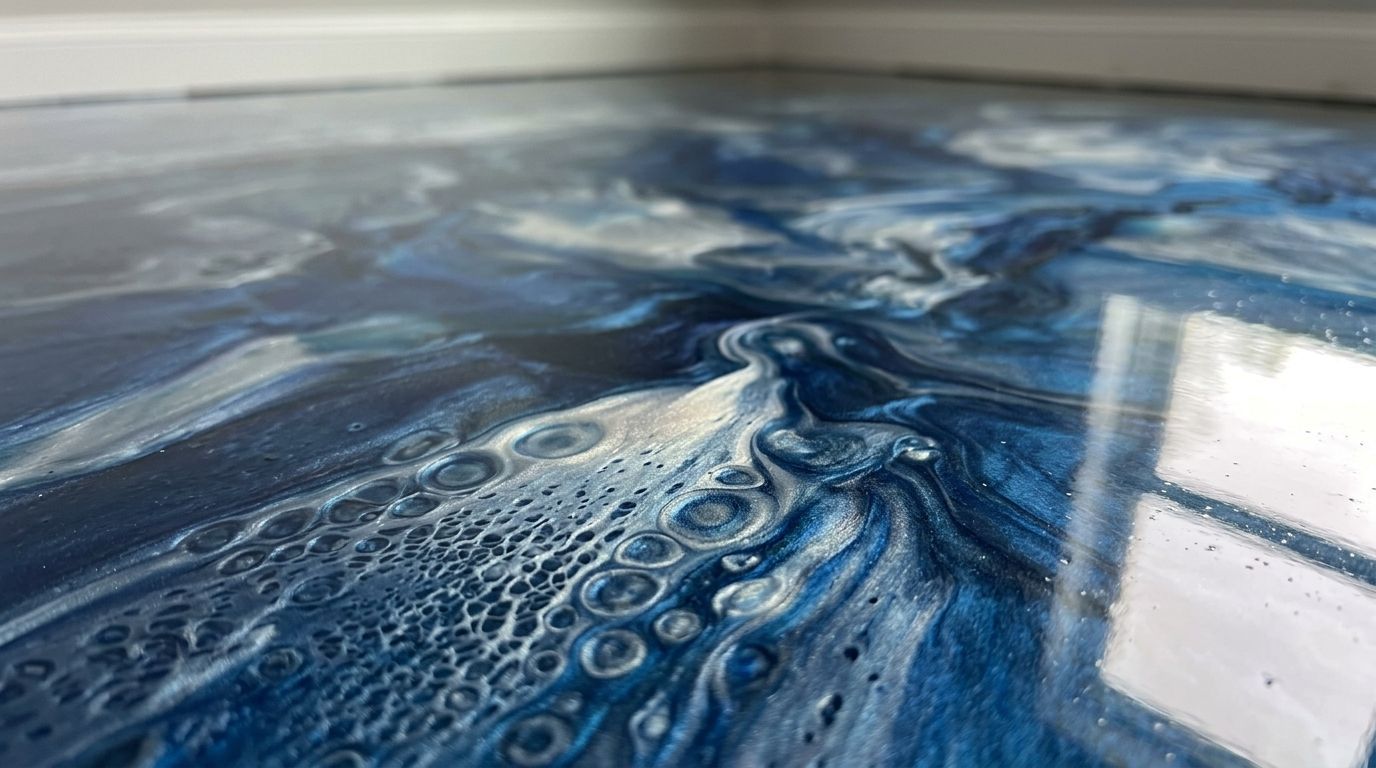
| Metallic | Flowing, three-dimensional swirls with a pearl or metal sheen; no two floors match | Finished basements, living spaces, showrooms, salons, offices | Very glossy, so it needs an anti-slip additive in wet areas; shows scratches more on dark colours |
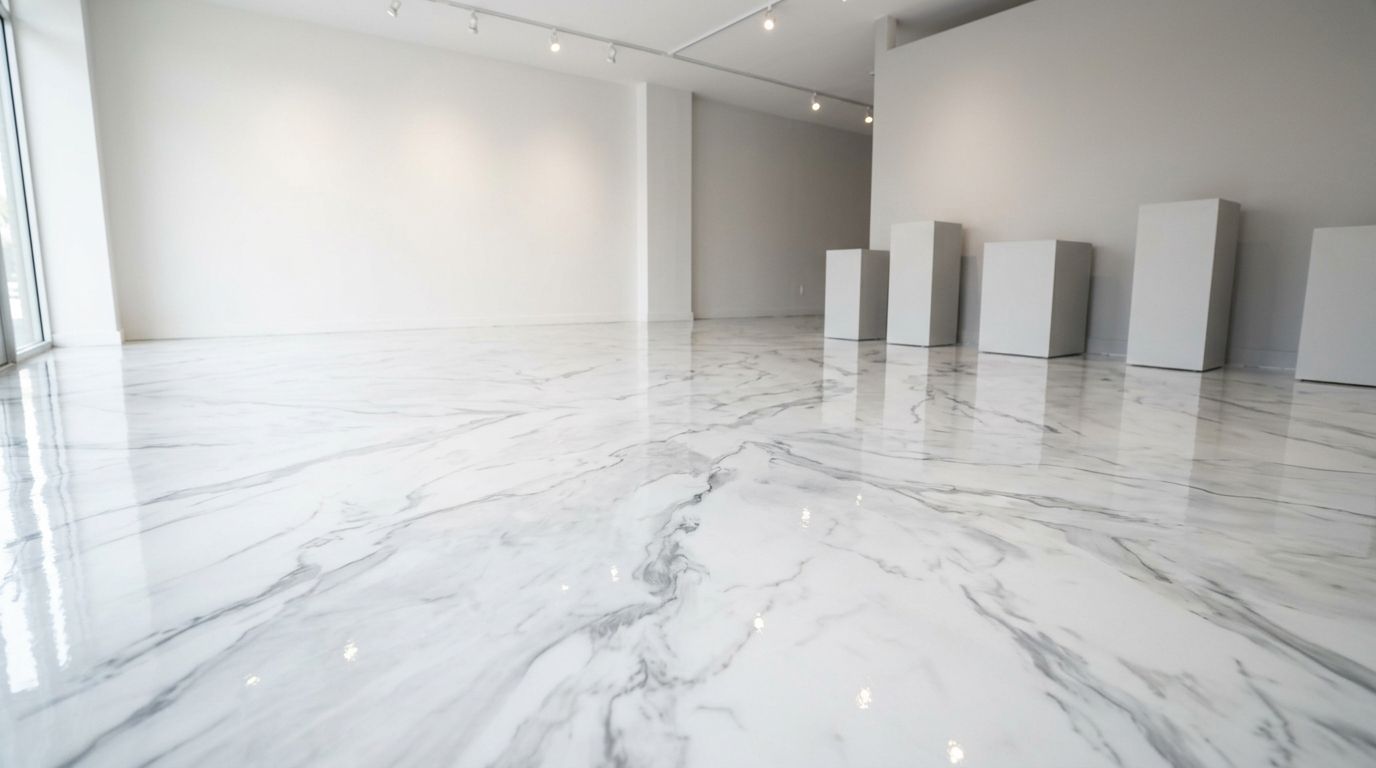
| Marble | Veined, stone-like pattern that mimics natural marble, with no grout lines | Retail stores, lobbies, offices, entryways, kitchens | Gives a high-end look without the upkeep of real stone |
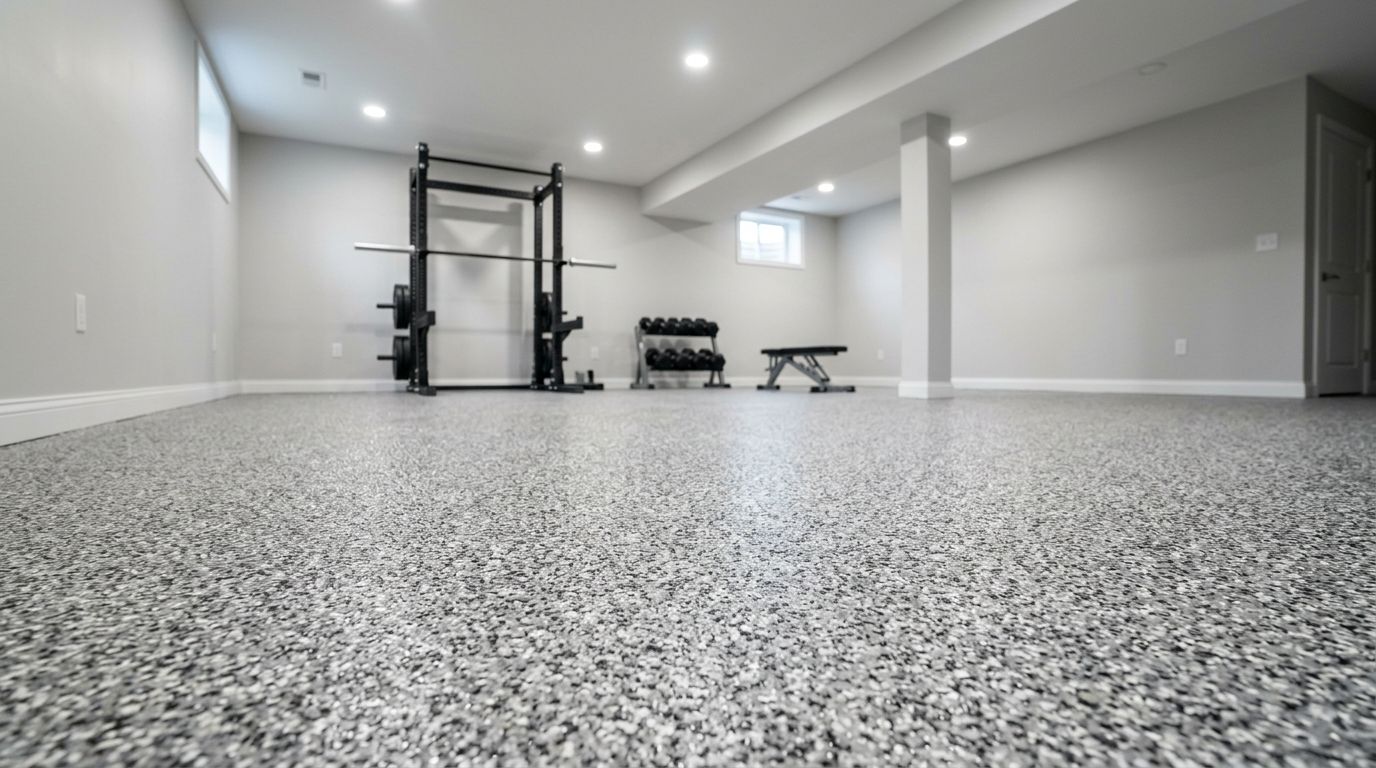
| Decorative flake | Coloured vinyl chips locked under a clear topcoat, like terrazzo or granite | Basements, home gyms, laundry rooms, garages, commercial washrooms | The most forgiving finish: hides dust and wear and adds texture underfoot |
| Solid colour | One even colour, from light grey to safety colours | Warehouses, manufacturing, workshops, utility spaces | Most practical and easiest to mark with lines and zones |
Metallic Epoxy Floors
A metallic epoxy floor is made by mixing metallic pigments into the epoxy and working them while the coating is still wet. The installer moves the material to create depth, swirls and movement, so every floor comes out one of a kind. If you've seen epoxy floor designs that look like marbled lava, ocean water or brushed steel, that's metallic.
It's the finish people choose when the floor is meant to be the feature of the room. In homes, it's most popular for finished basements, where it turns a cold concrete slab into something that looks intentional. Our basement epoxy floors page covers what that looks like in practice. In commercial spaces, it suits showrooms, salons and offices that want a modern, seamless look.
The trade-offs are real, though. Metallic floors are very glossy, so in any space that sees water or snow melt, an anti-slip additive in the topcoat is a must. Dark metallics show fine scratches and dust more than lighter ones. And because the result depends on the installer's hand, this is the finish where experience matters most.
Marble Epoxy Floors
A marble epoxy floor uses layered pigments and veining techniques to recreate the look of natural stone. Done well, most people won't know it isn't marble until they notice there are no grout lines anywhere.
That seamless surface is a big part of the appeal. Real marble tile stains, needs sealing, and collects dirt in the grout. Marble epoxy gives a lobby, retail floor or office the same high-end feel with a surface that wipes clean. It's one of the finishes we're asked about most for commercial epoxy floors, and it also shows up in kitchens and entryways at home.
Decorative Flake Epoxy Floors
Flake systems are the workhorse of decorative epoxy flooring. Coloured vinyl chips are broadcast into the base coat, then sealed under a clear topcoat. The result looks a bit like granite or terrazzo and comes in blends from subtle greys to bold mixes.
Flake is the most forgiving finish we install. The texture hides dust, footprints and small imperfections, and it gives better grip underfoot than a smooth gloss. That's why it's a go-to for basements, home gyms, laundry rooms and busy commercial washrooms. See our decorative flake floors page for blends, and our slip-resistant floor coatings if traction is the main concern.
Solid Colour Epoxy Floors
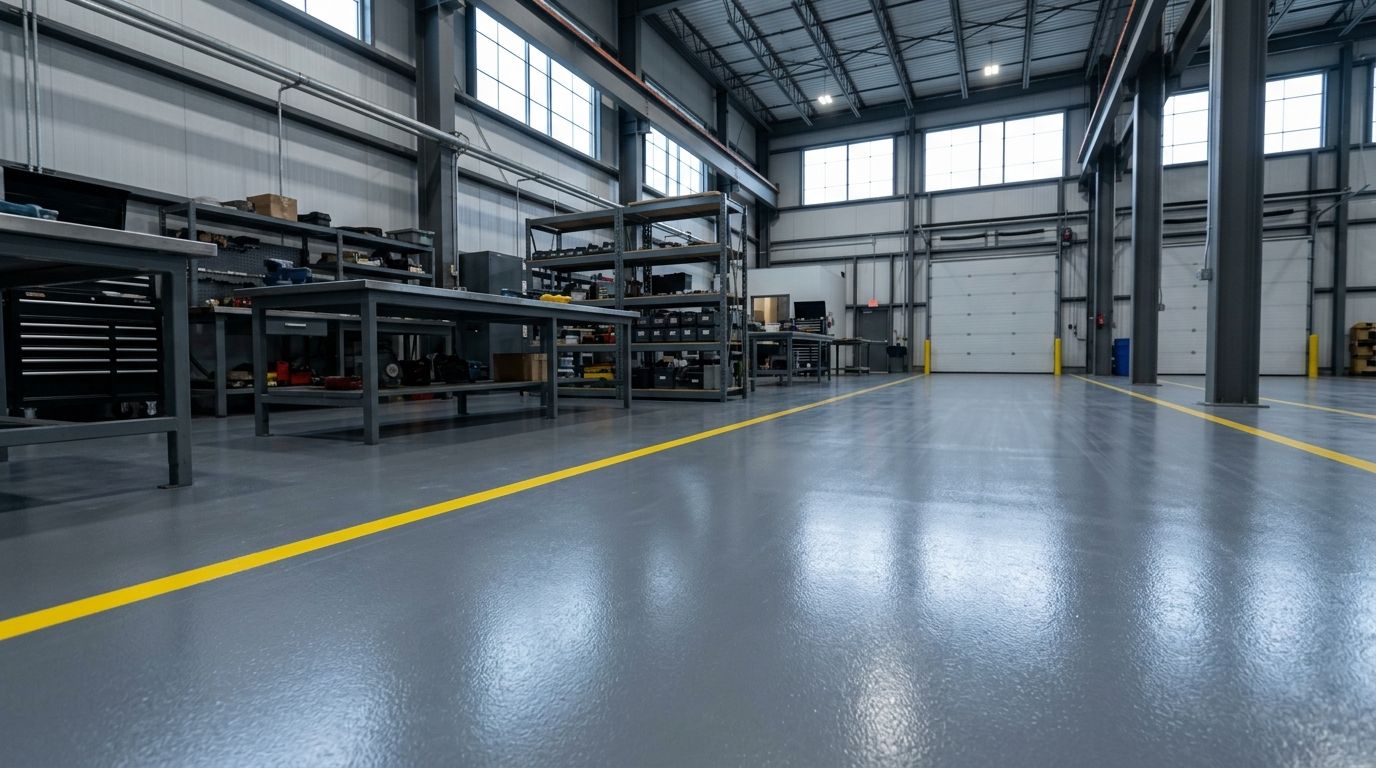
Solid colour is the most practical of the four: a single pigmented coat system in the colour you choose. Grey is the classic, but epoxy floor colours run from bright white for clean rooms to safety yellow and red for work areas.
This is the finish behind most industrial epoxy floors and warehouse epoxy flooring, where durability, easy cleaning and clear markings matter more than decoration. It's also where our floor marking service comes in, adding walkways, forklift lanes and work zones on top of the coating system.
Where Topcoats Fit In
Every finish above is sealed with a clear topcoat, and that last layer does a lot of the protecting. On floors that see sunlight or heavy wear, a UV-stable polyaspartic topcoat helps the finish hold its colour and resist scuffing. Whether you need one depends on the room, and it's part of what we look at when we quote.
Choosing a Finish Room by Room
Most questions we get about epoxy flooring in the house come down to a few spaces:
- Basements: metallic for a finished living space, flake for a gym, rec room or laundry area. Either way, the slab should be moisture-tested first.
- Kitchens and entryways: marble or a light solid colour for an easy-to-clean, high-end look.
- Garages: usually flake for texture and grip. Our garage epoxy floors page covers the options.
- Living spaces and home offices: metallic or marble, where the floor is part of the design. Our residential epoxy floors page shows more of what's possible at home.
On the commercial side, the choice is driven by use. Epoxy flooring for a retail store or salon leans decorative: metallic or marble. Production floors and warehouses lean solid colour with markings. Wet, hot environments like commercial kitchens and restaurants and fluid-heavy automotive shops need systems built for those conditions first and looks second.
When Epoxy Isn't the Right Answer
We install more than epoxy, so we can be straight about its limits. In large commercial spaces where you want the concrete itself to be the finish, polished concrete can be the better fit: there's no coating to wear through, and upkeep is low. In commercial kitchens and other spaces with hot washdowns and thermal shock, urethane cement often outperforms standard epoxy. If one of those suits your space better, we'll tell you.
Epoxy Flooring Pros and Cons
Weighing up epoxy flooring pros and cons in one place:
- Pros: seamless and easy to clean, resistant to stains and many chemicals, far more design options than bare concrete, and a long service life on a properly prepared slab.
- Cons: glossy finishes can be slippery when wet without an additive, quality depends heavily on prep and the installer, and it isn't a DIY-friendly product for anything beyond a basic floor.
What Affects the Cost
Every floor is quoted on its own, but the same factors drive decorative epoxy flooring cost on every job: the finish (metallic and marble take more labour and skill than solid colour or flake), the size and layout of the space, and the condition of the concrete. Most of the difference between a floor that lasts and one that peels comes down to surface preparation and grinding, and any crack repair the slab needs before coating goes on.
Epoxy Flooring Across Cambridge and the Waterloo Region
We're based in Cambridge and install epoxy flooring across the Waterloo Region, from homes to warehouses. If you're looking for epoxy flooring in Cambridge, Kitchener, Waterloo, Guelph, Brantford or Paris, you can see all the cities we serve. Whichever finish you're leaning toward, the first step is the same: a look at the slab and the space, so the recommendation fits how the floor will actually be used.
Frequently Asked Questions
What is the most durable type of epoxy flooring?
Durability depends more on the system's thickness and the surface prep than on the finish itself. Solid colour industrial systems are typically built the heaviest, and decorative flake is the most forgiving day to day because the texture hides wear.
Is metallic epoxy slippery?
A smooth metallic finish can be slick when it's wet. Adding an anti-slip additive to the topcoat fixes that, and we recommend it anywhere water, snow melt or spills are likely.
Can epoxy flooring go over in-floor heating?
Yes. Epoxy can be installed over radiant in-floor heating, and we do it. We plan how the heating system is managed during the install and cure so the coating bonds and cures properly.
Is epoxy floor paint the same as an epoxy floor coating?
No. Our epoxy flooring systems are two-part coatings built for durability and chemical resistance. Our epoxy floor paint service is separate and is used for floor markings, lines, work zones and detailing. Basic floor paint isn't a substitute for a professional coating system.
Which epoxy finish is best for a basement?
Metallic suits finished living spaces where the floor is part of the design. Decorative flake suits gyms, rec rooms and laundry areas because it's more forgiving and adds grip. Either way, we test the slab for moisture before recommending a system.
Not Sure Which Finish Suits Your Space?
Tell us about the room and how it's used, and we'll recommend the finish that fits, along with an honest look at the trade-offs. Call us at 226-243-3104 or request a free quote.
You might also like