Grand River Epoxy | Epoxy Flooring Blog
Are Epoxy Floors Cold? Basement Comfort in a Canadian Winter
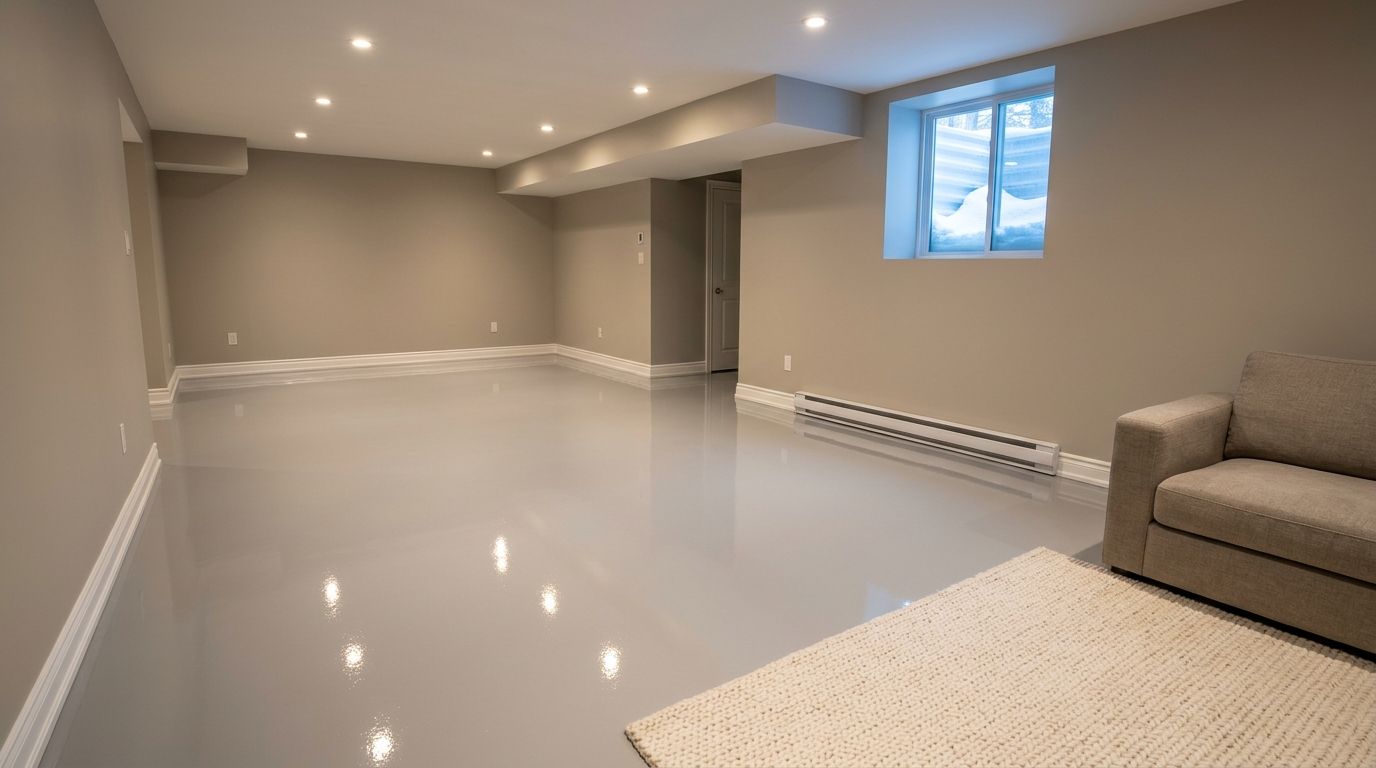
It's the question we hear most from people finishing a basement in Cambridge or Kitchener, usually right after they've seen a glossy epoxy floor they love: are epoxy floors cold? Is epoxy flooring warm enough to walk on in January, or will it feel like standing on a skating rink?
The honest answer: an epoxy floor feels about as warm as the concrete under it, and no colder. That means in an unheated basement it can feel cool, the same way tile or bare concrete does. But there are simple, proven ways to make it comfortable, and one of them makes it the warmest floor in the house.
Why Epoxy Floors Can Feel Cold
Epoxy itself doesn't make a floor cold. It's a thin coating bonded to the slab, so it takes on the slab's temperature. The coolness you feel comes from the concrete underneath, and from how quickly a hard surface pulls heat from your bare feet.
That second part matters. Wood, carpet and cork feel warm because they're soft insulators: they pull heat from your skin slowly. Hard, dense surfaces like stone, tile and concrete pull heat faster, so they feel cooler even at the same room temperature. A coated floor is a hard surface, so it behaves the same way.
Are Epoxy Floors Cold in Winter?
Are epoxy floors cold in winter? In a basement, that depends almost entirely on the slab. A basement slab sits on the ground, and in an Ontario winter the ground stays cool. Slabs near exterior walls, under windows and in walkouts run coolest. A slab under a well-heated living space, away from outside walls, will feel much more neutral.
So are epoxy basement floors cold? Out of the box, they feel about like a tile floor in the same spot. The good news is that the same fixes people use for cold tile work even better with epoxy.
Is Epoxy Flooring Colder Than Tiles?
| Epoxy | Ceramic / porcelain tile | Luxury vinyl plank | Carpet | |
|---|---|---|---|---|
| How it feels underfoot | Cool, like tile | Cool | Warmer, softer | Warmest |
| Works over in-floor heating | Yes, very well | Yes | Depends on the product | Poorly |
| Grout lines or seams | None | Many | Seams between planks | None |
| Handles basement water | Very well | Well (grout can stain) | Water can get under it | Poorly |
So is epoxy flooring colder than tiles? Not really; they feel very similar. Epoxy wins on being seamless, and vinyl and carpet win on feeling soft and warm. If you're weighing those options for a basement, our epoxy vs vinyl flooring for basements comparison covers moisture, comfort and wear side by side.
Can You Epoxy Over Radiant Floor Heating?
Yes. Can you epoxy over radiant floor heating? It's one of the best pairings there is, and it's something we install. Because epoxy is a thin coating bonded directly to the slab, heat from the pipes or cables moves straight up through it. There's no thick layer or air gap slowing it down the way there is under some floating floors.
A heated epoxy basement floor is warm, even, and seamless, with nothing to trap moisture. If you're finishing a basement from scratch or replacing a slab, it's worth pricing in-floor heat at the same time. Installing a coating over a heated slab takes some planning around how the heating system is run during the install and cure, so mention it when you ask for a quote.
Other Ways to Make an Epoxy Floor Feel Warmer
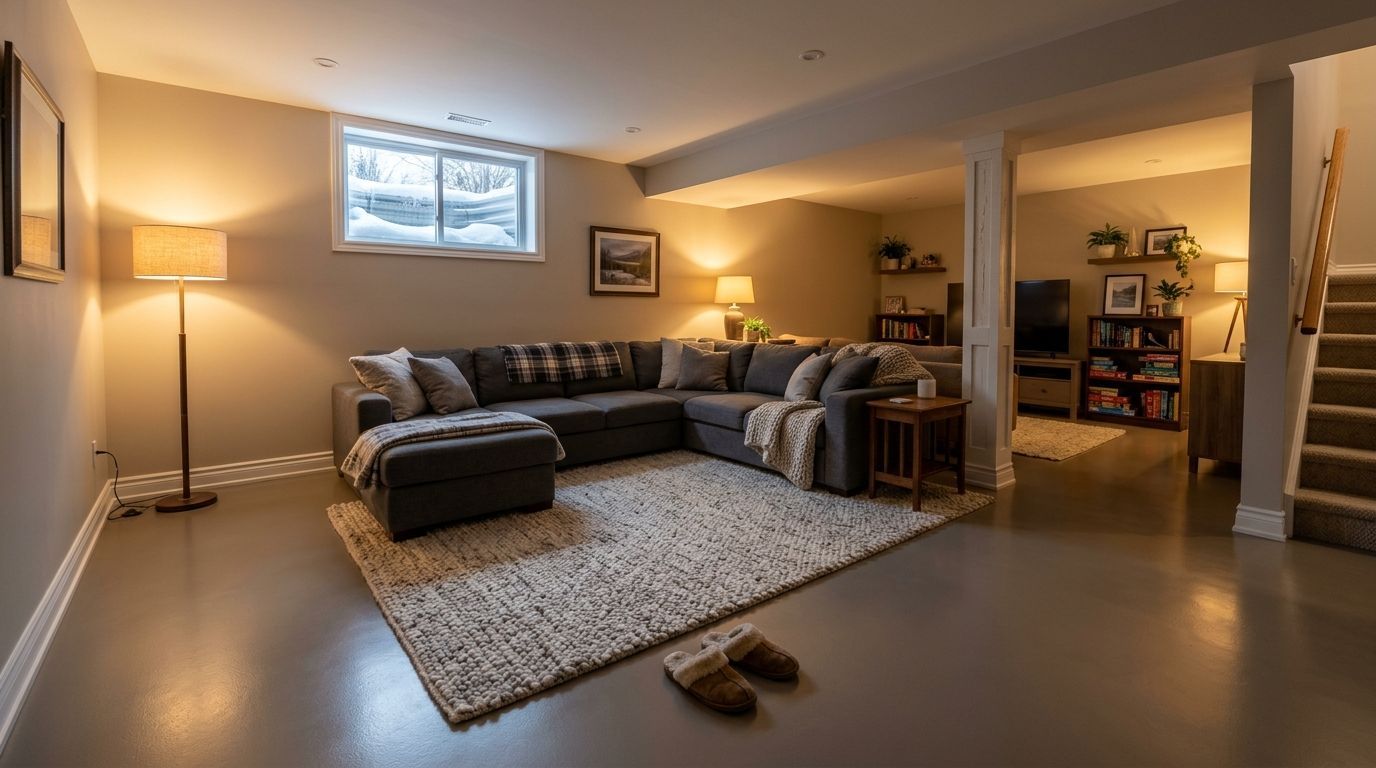
- Area rugs where you sit and stand. The simplest fix, and the one most people use in rec rooms and home theatres.
- Keep the basement heated consistently. A basement kept at a comfortable temperature all winter has a noticeably warmer slab than one that's only heated when it's in use.
- Choose a textured finish. A decorative flake floor has a slight texture that some people find more comfortable underfoot than high gloss.
- Address moisture first. A damp slab feels colder and causes other problems. Proper surface preparation and a moisture test come before any coating.
- Slippers in the coldest months. Unglamorous, but true for any hard floor in a Canadian basement.
What We Check Before Recommending a Basement Floor
Comfort is only one part of choosing a basement floor, and it's rarely the deciding one. Before we recommend anything, we look at the things that decide whether a floor will last down there:
- Moisture. A quick test tells us whether the slab is dry enough to coat, or needs treatment first.
- Cracks and old patches. These get repaired before coating so they don't show through.
- How the room will be used. A theatre, a gym and a laundry room each point to a different finish.
- Heating plans. If in-floor heat is on the table, it changes the order of work, so it's better to know early.
Once those are settled, comfort is easy to plan for. Most of the basements we coat end up warmer and drier than they were with bare concrete, simply because the space finally gets finished and heated properly.
Is a Cool Floor Actually a Problem?
For a lot of spaces, no. Home gyms, laundry rooms, workshops and storage areas don't need a warm floor, and a cool, hard, easy-to-clean surface is exactly what you want there. Add slip-resistant floor coatings in any of those rooms that see water.
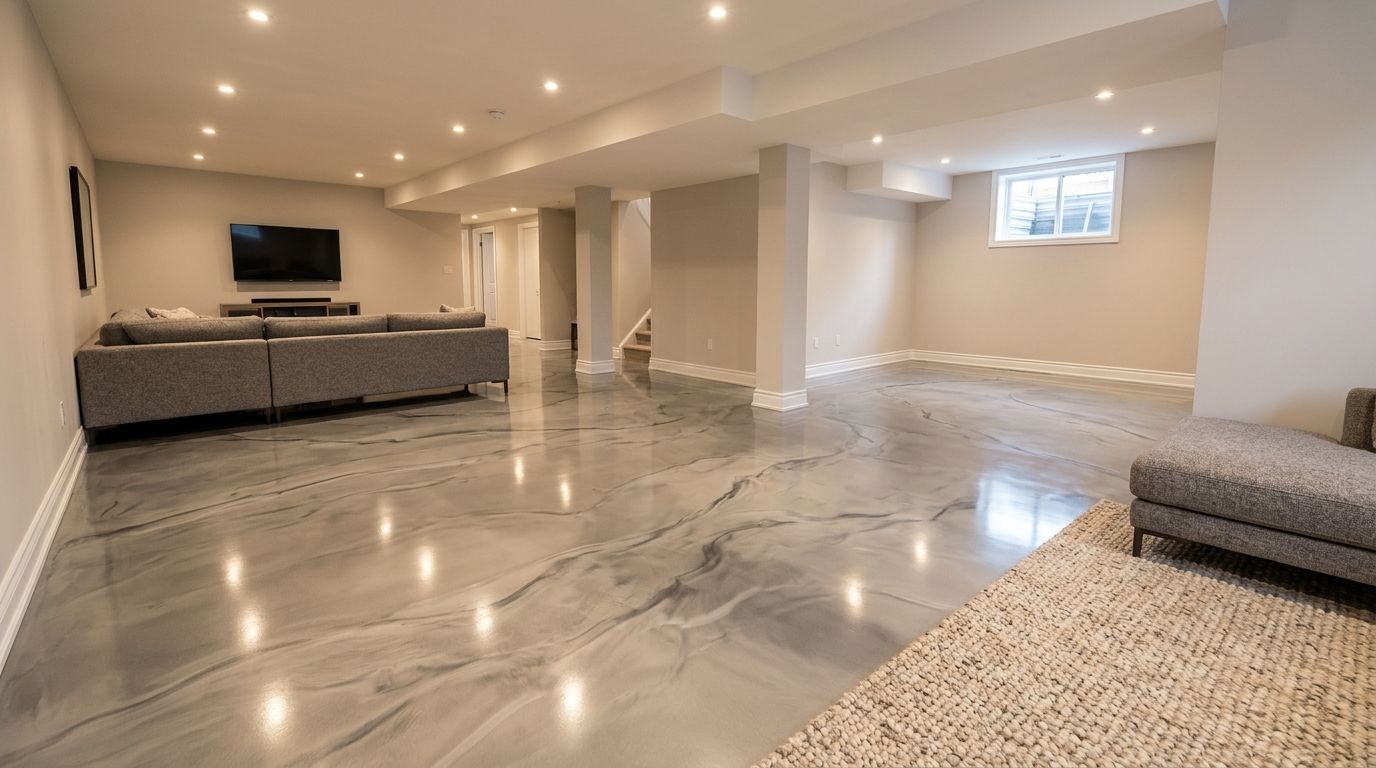
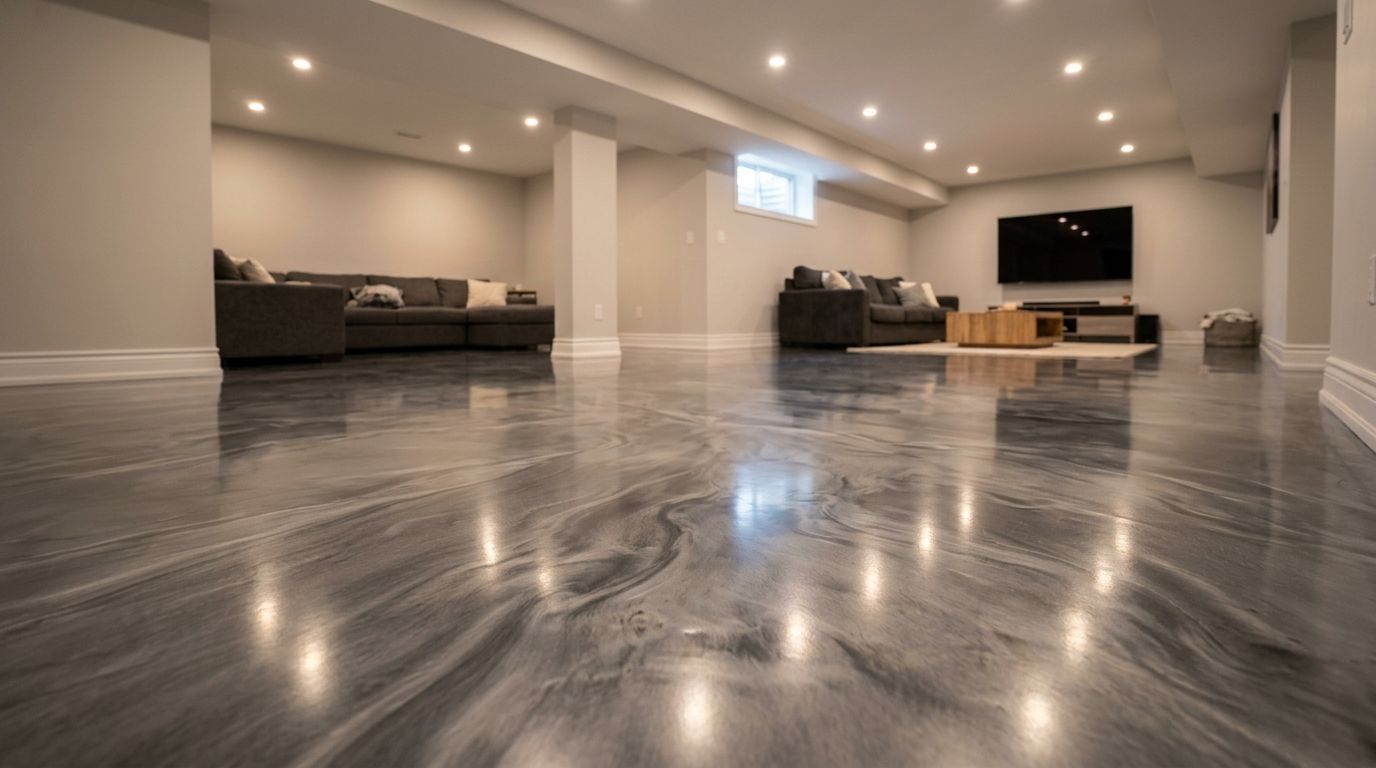
Where comfort matters most, in a family room, theatre or guest suite, plan for heat or rugs from the start. If metallic is the look you're after, our breakdown of metallic epoxy floor pros and cons explains how it suits a finished basement, since it's the most popular finish there.
Planning a Basement Floor This Winter?
Winter is the most common time for basement projects, and a heated basement is a fine place for an install. Our guide to epoxy flooring in winter covers what cold weather changes indoors. If you're still choosing a finish, the types of epoxy flooring guide walks through metallic, marble, flake and solid colour.
Our basement epoxy floors and residential epoxy floors pages show what we install in homes. Whatever you decide, we're happy to look at the slab and tell you honestly how it will feel, for basements across the Waterloo Region, Cambridge and Guelph.
Frequently Asked Questions
Are epoxy floors cold?
They feel about as cool as the concrete under them, similar to tile. In a heated basement, or with in-floor heating or area rugs, an epoxy floor is comfortable year-round.
Can epoxy go over in-floor heating?
Yes. Epoxy bonds directly to the slab, so heat moves straight through it. It's one of the best ways to get a warm, durable basement floor, and it's something we install.
Is epoxy flooring colder than tiles?
Not noticeably. Both are hard surfaces and feel similar underfoot. Epoxy has no grout lines and handles basement water better.
Does epoxy make a basement colder?
No. The coating doesn't change the slab's temperature. A damp slab can feel colder, which is why we test for moisture before coating.
Want a Warm, Durable Basement Floor?
Tell us about your basement, including whether you're thinking about in-floor heating, and we'll walk you through the options. Call 226-243-3104 or request a free quote.
You might also like